
Still Operates at -70°C: Breakthrough in Low-Temperature Lithium-Ion Battery Technology—How Can Battery Pack Manufacturers Capitalize on This Opportunity?
In March 2026, the scientific research team composed of 811 institutes of the 8th Academy and Nankai University in China Aerospace Science and Technology Corporation published a pioneering achievement in the top international academic journal Nature: successfully developed hydrofluorocarbon electrolyte for high energy density and low temperature batteries.
How big is this breakthrough? According to Li Yong, 811 researchers, the energy density of lithium batteries on the market at room temperature is about 300 WHR/kg, in the environment of minus 20 degrees Celsius, the energy density will drop to below 150 kWh/kg. However, this research result can make the energy density of lithium battery greater than 700 watt-hour/kg at room temperature, and still up to about 400 watt-hour/kg at minus 50 degrees Celsius, it can still work normally at the extreme low temperature of minus 70 degrees Celsius..
Simply put, a battery of the same quality can increase the power storage capacity by 2 to 3 times or even higher, and at the same time, the low temperature performance can achieve a qualitative leap. This is a fundamental change for applications such as energy storage systems, outdoor industrial equipment, polar scientific research equipment, and low-temperature cold chain cargo van in high latitudes.
but the breakthrough at the electrolyte level is only the first step. From laboratory results to actual product landing, the engineering verification of the whole PACK system design is separated in the middle.
In low temperature environment, the challenge of batteries is not only electrolyte. Low temperature will lead to cell increase of internal resistance, decrease of discharge platform voltage, and significant attenuation of available capacity. A piece of cell with excellent low temperature performance, if the low temperature charge and discharge strategy of BMS is not designed properly, the risk of overcharge, overdischarge or lithium evolution may still occur. Battery pack thermal insulation structure design, heating film layout and temperature collection point selection will directly affect the actual performance under low temperature conditions.
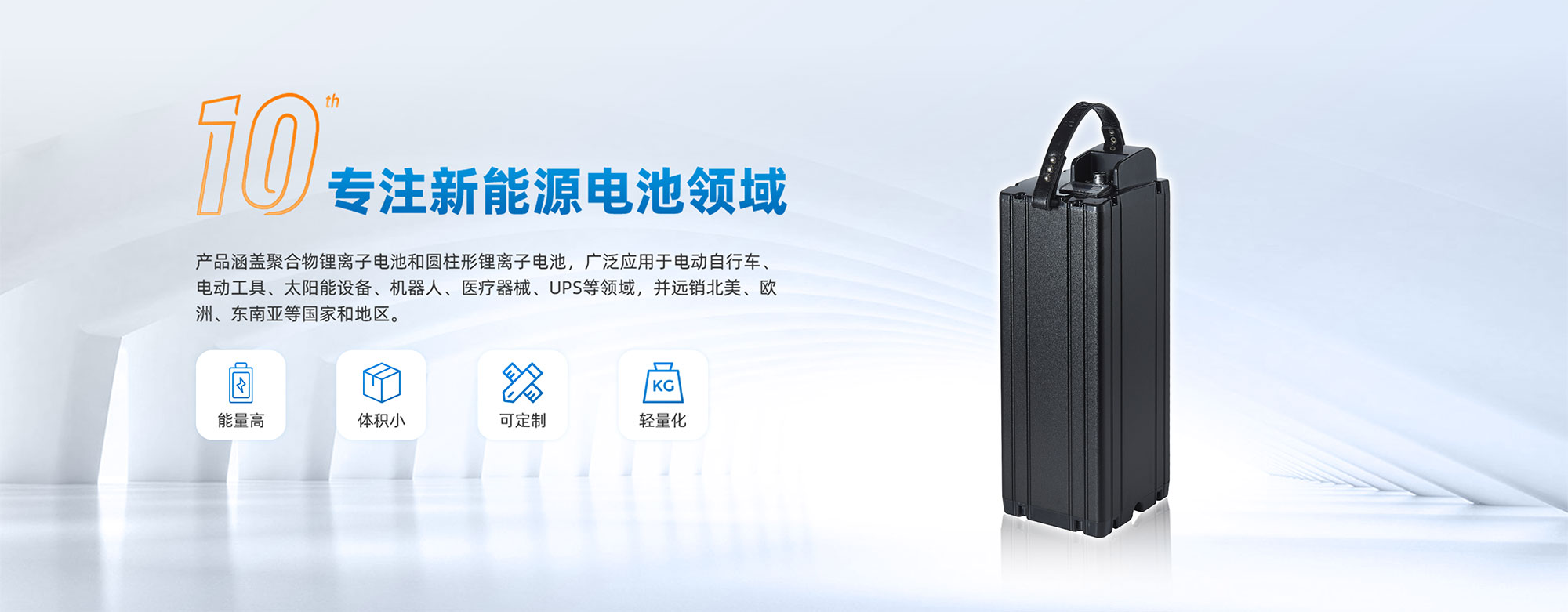
Dongguan Juneng New Energy Technology Co., Ltd. I have accumulated more than 10 years of design experience in the application of battery pack thermal management, and have mature engineering schemes in the low temperature protection strategy of BMS. The company's service scope covers many fields such as industrial equipment, medical instruments, AGV cargo van, and has also accumulated profound accumulation in battery pack structure design and waterproof technology. For equipment manufacturers in low-temperature applications, select a PACK partner that can provide solutions in three dimensions: cell selection, BMS strategy, and thermal management system, it is much smarter than waiting for the product to be fixed and then find the battery.



 Yue Gong Wang An Bei No. 4419002007491