
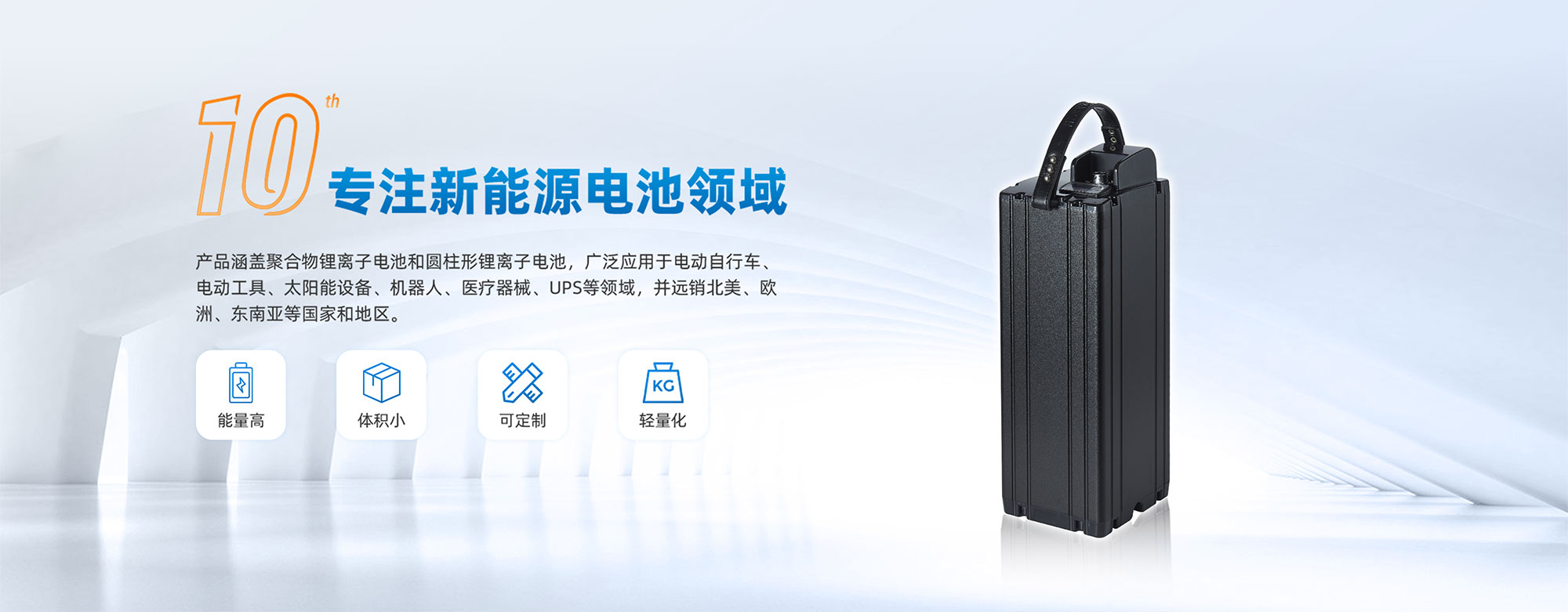
"Green Ledger": The Carbon Footprint Journey of a Battery
time:2026-10-19
Under the background that the EU carbon border regulation mechanism (CBAM) is about to take full effect, a battery pack "carbon footprint" is changing from implicit cost to explicit competitiveness. Dongguan Juneng New Energy Technology Co., Ltd., an enterprise that has been deeply engaged in lithium battery PACK for nearly ten years, has upgraded carbon management from "compliance department" to "core issues of the whole company", with a set of "green ledger" covering the whole life cycle, it provides practical samples of sustainable development for the industry.
Upstream traceability: make the carbon emissions of raw materials transparent and visible. Gather Energy new energy sources to establish direct data connection with upstream mining enterprises and smelters to obtain carbon emission factors of each batch of raw materials. The carbon emission factor of a batch of Indonesian laterite nickel ore is as high as 18kg CO ~/kg nickel due to pyrometallurgy; While the carbon emission of another batch of Indonesia laterite nickel ore is reduced to 8kg CO ~/kg nickel by wet process. After data transparency, energy-gathering new energy will include carbon cost weight in purchasing decisions, giving priority to low-carbon process suppliers.
Manufacturing optimization: "squeeze" the space for emission reduction in every detail. Energy efficiency optimization of production line equipment, low-carbon formula replacement of structural adhesive, path planning of logistics and transportation-these "micro innovations" accumulate, the "factory carbon footprint" of 80kWh lithium iron phosphate battery package is controlled at about 45kg CO%/kWh, which is better than the industry average of 65kg CO%/kWh. Energy gathering new energy also established a global data Lake to identify high energy consumption links through AI models, and the energy consumption per unit capacity decreased by 22% compared with three years ago.
Digital passport: make the carbon footprint "visible, accessible and trustworthy". The EU's new battery regulations require that power batteries must be equipped with "digital battery passports" from 2027. The new energy sources will be laid out two years in advance and a carbon management platform based on blockchain technology has been developed. Data from raw material procurement to cell production, PACK integration to vehicle loading, vehicle operation to decommissioning and recyclingIt can be uploaded in real time and cannot be tampered. Scan the QR code on the battery pack to view the complete carbon resume ".
Recycling closed loop: let each battery complete the journey from cradle to cradle. Juanneng New Energy has signed a long-term agreement with professional recycling enterprises to ensure the compliance disposal of retired battery pack. The lithium recovery rate of lithium iron phosphate battery has reached more than 90%, and the recovery rate of nickel cobalt manganese has exceeded 95%. Recycled materials re-enter the supply chain for new cell manufacturing, forming a "from mine to mine" cycle. Target by 2030, the proportion of recycled materials of core metal materials will be 30%.
When the world battery Industry entering the era of "carbon rules", those enterprises that lay out carbon management capabilities in advance will take the lead in the next round of reshuffle. The practice of using new energy sources for ten years proves that low carbon is not a burden, but a future-oriented investment. After all, the real green manufacturing is not for regulators, but for the next generation.



CUSTOMER SERVICE
 Yue Gong Wang An Bei No. 4419002007491