
The "power revolution" of the low-altitude economy: from cell breakthroughs to PACK system integration, drone batteries are being redefined.
Since 2026, low-altitude economy has been written into the government work report for the third consecutive year and included in the key layout of the "15th Five-Year Plan. Scenarios such as unmanned aerial vehicle test flight, air commuting, low-altitude logistics, emergency rescue and so on are rapidly spread out, while power batteries, as the "heart" of aircrafts, are undergoing a comprehensive upgrade from materials to systems.
Let's look at the breakthrough at the cell level first. The research results published by the team of Shenzhen International Graduate School of Tsinghua University in the journal Nature show that the energy density of the lithium-sulfur soft pack battery developed by the team reaches 549Wh/kg, far exceeding the level of traditional lithium-ion batteries, the storage capacity of 81.7% can still be retained after repeated charging and discharging 800 times in the conventional fast charging mode.. The mixed solid-liquid 46 large cylindrical low-altitude flying high-power battery released by Guoxuan Gaoke has a cell energy density of 330Wh/kg, and can still achieve 12C pulse discharge under the condition that the SOC is only 25%, 6C continuous discharge, support fast charging and power changing dual-mode, 5 minutes to complete the super-speed energy supplement.
But for the PACK factory, the improvement of the cell index is only the starting point. The real engineering challenge lies in how to assemble these high-performance cell into a light, safe and stable output battery pack.
Unmanned aerial vehicles are much more sensitive to weight than other application scenarios. Under the condition of a certain weight of the whole machine, the battery is lighter, which may leave more space for the load and Voyage </span> . High energy density cell will inevitably bring greater heat dissipation requirements. UAV take-off and landing require explosive power output, while Cruise requires stable discharge, which puts forward extremely high requirements for PACK structure design and thermal management system.
The practice of Guoxuan Gaoke provides a reference. Its PACK system adopts the cloud Shell technology, which improves the strength by 30% and reduces the weight by 40%. The independent transmission and supply architecture is matched with double-layer BMS. A set of platforms can be adapted to a variety of eVTOL models, the efficiency of cylinder grouping reaches 70%. Through directional second-level high-speed eruption and blocking strategy, thermoelectric separation is realized to ensure zero heat spread of aviation-level overall PACK..
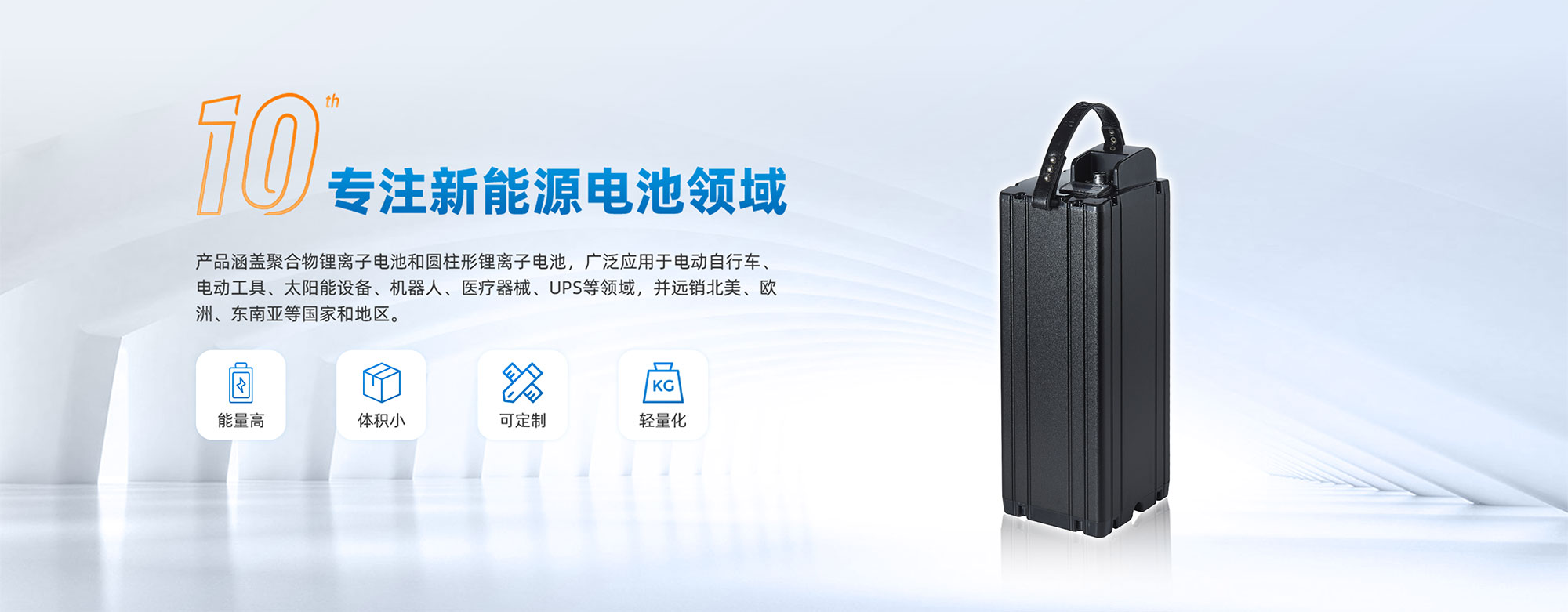
Dongguan Juneng New Energy Technology Co., Ltd. has accumulated practical project experience in the field of UAV battery customization. The 28.8V/14Ah battery solution provided by the company for special unmanned aerial vehicles adopts ternary ratio cell, S Series Battery for logistics unmanned aerial vehicles compresses the thickness to 6mm, and adopts flexible circuit board instead of traditional wiring harness. In the design of BMS, the energy gathering new energy adopts the "One scenario one strategy" approach, which strengthens the lightweight and high-rate communication capabilities for UAV scenarios to ensure that the battery status can be read by the flight control system in real time.
For equipment manufacturers who are entering the low-altitude economic track, choose PACK partners at the same time, a pragmatic judgment standard is whether the other party can give specific solutions in the three dimensions of energy density, lightweight and thermal safety, instead of showing only a beautiful cell parameter table.



 Yue Gong Wang An Bei No. 4419002007491