
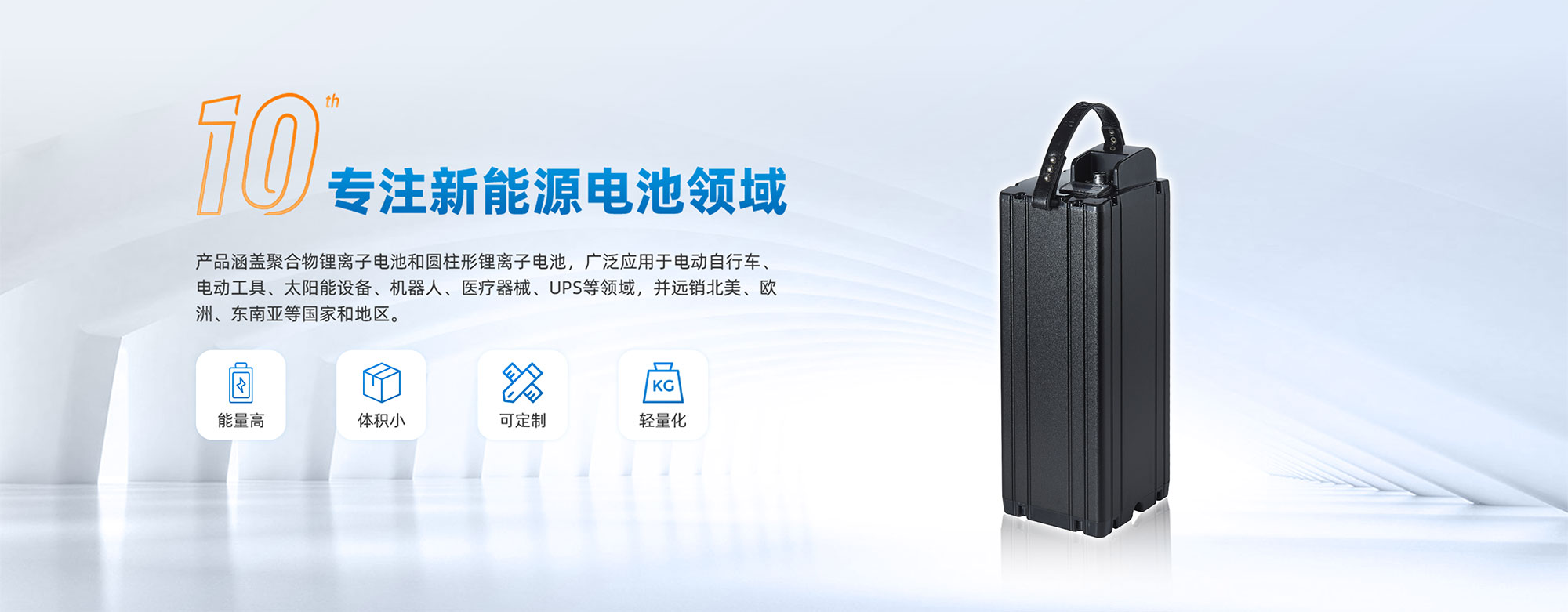
Powertrain Design for Multi-Cell Battery Pack Series–Parallel Configuration
In the fields of electric vehicles, unmanned aerial vehicles, energy storage equipment and so on, the design of power system is very important. With the continuous progress of battery technology, more and more application scenarios need to adopt multi-battery pack series-parallel solutions to meet higher energy density, power output and service life requirements. This paper will deeply discuss the dynamic system design of multi-battery pack series-parallel schemes, including its basic principles, design considerations, typical applications and related advantages.
I. Basic principles
multi-battery pack series-parallel solution refers to the combination of multiple battery pack in series and parallel to achieve the required voltage and capacity. Series connection can increase the voltage of the system, while parallel connection can increase the capacity of the system. Through reasonable combination, designers can obtain higher power output and longer endurance while maintaining relatively small volume and weight.
In practical applications, the series-parallel connection of battery pack can be flexibly adjusted according to specific requirements to achieve the best power system performance. For example, for the power demand of electric vehicles, multiple battery pack are usually connected in series to achieve high voltage, while multiple battery packs are connected in parallel to increase the total capacity, thus achieving longer mileage.
II. Design considerations
1. Battery selection
2. Battery management system (BMS)
battery Management System (BMS) is an important part to ensure the safe and efficient operation of multiple battery pack. BMS monitors the voltage, temperature, and charge/discharge status of each battery pack to ensure that the battery works within a safe range. For series-parallel battery systems, BMS needs to have balanced charging function to prevent some battery pack overcharging or overdischarging and prolong the service life of the battery.
3. Thermal Management
the battery will generate heat during charging and discharging. Reasonable thermal management scheme is very important to maintain the battery performance and safety. In a multi-battery pack power system, designers need to consider how to effectively dissipate heat to prevent the battery from overheating and causing performance degradation or potential safety hazards. Common thermal management methods include air cooling, liquid cooling and phase change materials.
4. System layout
the layout design of more than battery pack directly affects the overall performance and safety of the power system. Designers need to consider battery pack weight distribution, installation methods, and other components (such as motor and inverter)The connection method. Reasonable layout can reduce the center of gravity of the system and improve the handling performance and stability of the vehicle.
5. Charging scheme
the design of charging scheme is also an important consideration for multi-battery pack power system. Designers need to select appropriate charging methods according to the characteristics of battery pack, such as constant current charging, constant voltage charging or fast charging. At the same time, considering different charging requirements of battery pack, BMS should have intelligent charging management function to optimize charging efficiency and prolong battery life.
III. Typical applications
the power system of multi-battery pack series-parallel scheme is widely used in many fields. The following are typical scenarios:
1. Electric vehicle
in electric vehicles, the power system usually adopts series-parallel combination of multiple lithium ion battery pack to realize high voltage and large capacity. Through reasonable design, the electric vehicle can ensure the power output while achieving a long range and good acceleration performance.
2. Unmanned aerial vehicle
3. Energy storage system
in the field of renewable energy storage (such as solar energy and wind energy), the multi-battery pack series-parallel solution can effectively improve the storage and utilization efficiency of energy. By connecting multiple battery pack, the energy storage system can provide stable power output during peak power demand and balance the grid load.
IV. Advantage Analysis
the multi-battery pack series-parallel scheme has multiple advantages in power system design:
1. Flexibility
the series-parallel connection scheme can flexibly adjust the voltage and capacity according to different application requirements to meet diversified power requirements.
2. Efficient energy output
Through reasonable battery combination, higher energy density and power output can be realized, and the overall performance of the system can be improved.
3. Enhanced security
the application of BMS can monitor the battery status in real time, prevent overcharge, overdischarge and other situations, and enhance the security of the system.
4. Extend the service life
reasonable heat management and balanced charging functions can effectively prolong the service life of the battery and reduce the maintenance cost.
Many battery pack series parallel connection scheme plays an increasingly important role in power system design. Through reasonable battery selection, BMS design, thermal management scheme and system layout, designers can create efficient, safe and reliable power systems, to meet the needs of modern electric vehicles and energy storage equipment.



 Yue Gong Wang An Bei No. 4419002007491